
Meet Juha Aramo: From Fighter Jets to Flight Operations Leadership
Juha Aramo’s aviation career spans over four decades, beginning in 1980 in the Finnish Air Force, where he flew various types of jets. His military experience included a one-year instructor course in 1985, after which he spent 15 years training pilots on aircraft ranging from simple prop trainers to advanced military jets and transport category planes. A unique opportunity to attend a civil Air Traffic Control course led to several years providing initial ATC training using simulators.
In 1997, Juha transitioned to civil aviation, holding various training positions as a Type Rating Instructor (TRI) and Type Rating Examiner (TRE). One particularly formative experience was spending eight years giving A320 type ratings, where he gained deep insights into commercial pilot development.
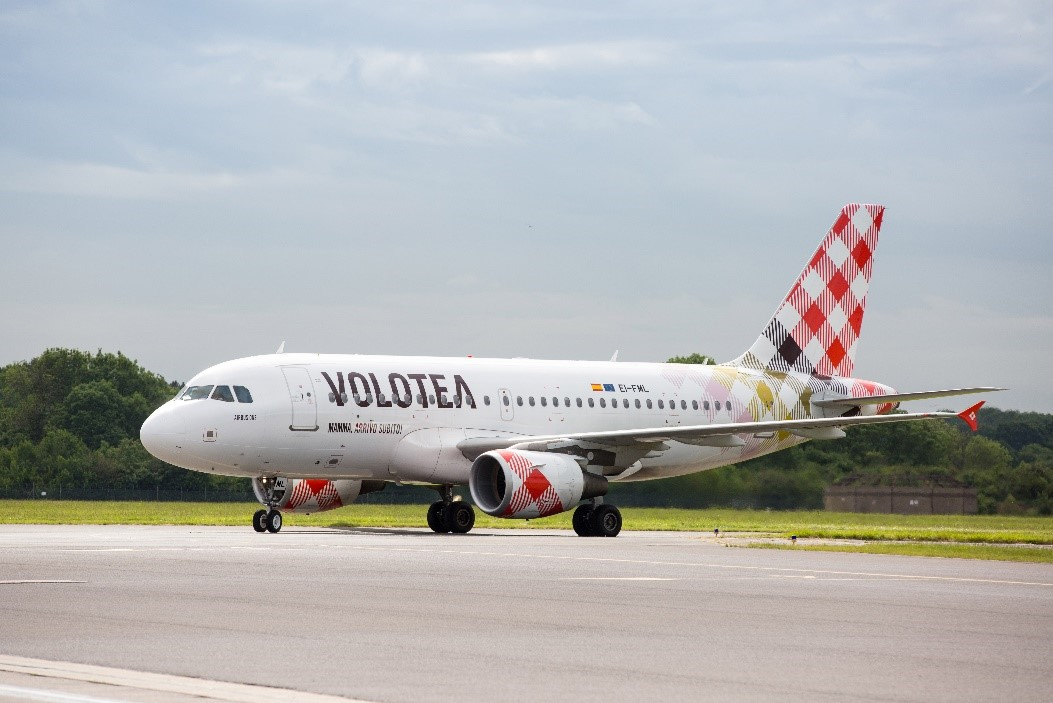
For the past seven years, Juha has served as Director of Flight Operations at Volotea, a young and dynamic airline. Despite spending most of his time in the office rather than the cockpit, he still considers himself primarily a pilot at heart.

The Journey from Paper to Digital: A Vision Takes Shape
Thomas recalls first meeting Juha about four years ago, when Volotea was exploring the implementation of Evidence-Based Training (EBT). At that time, Juha had a clear vision for the future, but the path forward was challenging. The airline was grappling with major documentation problems and needed to digitize its systems as a foundational step.
“We had a clear vision of where we wanted to go, but we needed to master the basics first—moving from paper to digital,” Juha explains. “Now, I can see that we can go much further than just electronic files. The possibilities are far greater than we initially imagined.”
This realization marked a turning point: digital transformation wasn’t just about replacing paper with PDFs, but about unlocking entirely new capabilities for data-driven, adaptive training.
Why CBTA Matters for Volotea: Efficiency Through Individualization
Volotea operates with significantly fewer resources than major flag carriers, yet must maintain the same rigorous safety standards. This reality makes training efficiency not just desirable, but essential.
“We don’t have the same resources as major flag carriers, but we must ensure we meet the same level of safety,” Juha emphasizes. “That requires a more efficient way to achieve our goals, and I believe CBTA is the solution.”
Through a partnership with Airbus, Volotea is implementing Evidence-Based Training (EBT), but Juha’s ambitions extend further. He envisions applying the CBTA approach across all flight operations—including flight efficiency, supervision, checking, and safety management.
🔍 Do you know what CBTA means?
The Assessment Advantage
For Juha, the most compelling aspect of CBTA is the assessment component—understanding each pilot’s competency profile.
“Competency-Based Training and Assessment—the assessment part is most interesting to me,” he notes. “Knowing my pilots and understanding where they are on each competency is the most important aspect of CBTA.”
This is particularly critical given Volotea’s hiring approach, which includes both cadets and experienced captains. By having detailed competency profiles, the airline can apply individualized, tailored training—a far more efficient method than standardized programs.
“We hire a lot of cadets and captains, and this approach is the only way to truly prevent incidents and maintain safety at a higher level,” Juha explains.
The Data Challenge: Too Much Information, Too Few Hands
When Thomas asks why individualized training is difficult to implement, Juha points to a fundamental challenge: data volume.
“The main problem is that we have so much data, but we don’t have enough people to handle it all,” he says.
Without automation, personalized training at scale simply isn’t feasible. But automation introduces another critical consideration: confidentiality.
“This information must be confidential. You can’t have all pilot data floating around the office,” Juha stresses. “The data, the training, the recommendations—everything has to be secure and closed. The instructor doesn’t even need to know why a particular pilot has been assigned a specific session.”
This requirement for privacy-by-design adds complexity to the technological solution, but is non-negotiable for maintaining trust and compliance.
Overcoming Resistance: The “If It’s Working, Why Change?” Mentality
Like many organizations pursuing transformation, Volotea faces resistance to change. The most common objection? “If it’s working now, why change?”
“The biggest issue, as always, is resistance to change,” Juha acknowledges. “This perspective fails to consider the future needs of the company.”
Thomas notes that this pattern appears across many organizations. Initiating concrete changes before demonstrating clear benefits is difficult. Stakeholders need to see evidence that there’s no additional risk and that a clear change management plan exists.
Adding to the complexity, Juha points out that numerous parties are involved in flight operations, and achieving alignment across all of them is extremely challenging.
An Unpopular Opinion: You Can’t Do Everything In-House
When asked about an unpopular opinion in his field, Juha doesn’t hesitate: “I’m quite unpopular with my opinion that we cannot do everything in-house, even though we have outstanding professionals in data science.”
This perspective recognizes the reality that while internal expertise is valuable, external solutions and partnerships sometimes offer capabilities that would be inefficient or impossible to develop internally—particularly for a mid-sized airline with resource constraints.
👉 Check out Hinfact all-in-one new generation training management system!
Training Beyond Safety: A Holistic Approach
Thomas poses an important question: Is training only about safety?
“Safety undoubtedly comes first,” Juha responds, “but under the umbrella of safety, we should also improve our operations regarding the aircraft—considering passengers and enhancing flight efficiency.”
This holistic view recognizes that excellent training delivers multiple benefits: safer operations, better passenger experiences, more efficient fuel usage, and improved operational performance, all interconnected under the safety umbrella.
The Biggest Challenge: Changing Mindsets
When asked about his current biggest challenge, Juha identifies a cultural shift:
“The biggest challenge is getting all people involved with flight operations to understand the importance of competencies and how to assess pilots, as well as the significance of having meaningful information for training and supervision purposes. This requires a big change in how we’re doing things at the moment.”
This isn’t merely a technical or procedural change, it’s a fundamental shift in how the organization thinks about pilot development, moving from a compliance-driven, standardized approach to a competency-focused, individualized one.

Looking Ahead: AI and the Future of Aviation Training
When asked to envision aviation training in five years, Juha acknowledges the difficulty of the question while expressing optimism about technological advancement.
“It’s a difficult question because I believe the world will change dramatically in five years. Aviation training should keep pace with this change and be prepared to use all the technology that’s coming with Large Language Models and AI. This will save a significant amount of time.”
Thomas draws a connection to the previous episode with Yann Renier, noting that AI and generative AI could serve as powerful levers for generating dedicated and individualized training programs. This reinforces Yann’s unpopular opinion: training isn’t about the number of hours spent in the simulator, but about accurately assessing competency and avoiding wrong judgments.
👀 Listen to our last episode with Yann Renier, Head of Training and Licensing at IATA
Values-Based Decision Making: The Final Piece
In the podcast’s closing reflection, Juha shares what he’s recently learned: “I learned the true importance of implementing company values in training. It’s not enough to teach how to fly the aircraft safely and efficiently. We must also support pilots in making correct decisions when there are no ready answers. That’s the moment when you need the correct values to make the correct decisions.”
This insight reveals the deepest layer of Juha’s vision for training: technical competence and regulatory compliance are necessary but insufficient. When pilots face ambiguous situations without clear procedures, their decisions must be guided by internalized company values—a capability that training must deliberately cultivate.
Conclusion: Efficiency Through Intelligence
Juha Aramo’s mission to reinvent pilot training at Volotea represents more than digitization or regulatory compliance. It’s a comprehensive reimagining of how a mid-sized airline can achieve world-class safety and operational performance through intelligent use of data, technology, and individualized development.
The journey from paper to precision requires overcoming significant obstacles: managing vast amounts of confidential data, automating assessment and training recommendations, aligning diverse stakeholders, and fundamentally changing how people think about pilot competency. Yet Juha’s vision is clear: by leveraging CBTA principles, partnerships with industry leaders like Airbus, and emerging AI technologies, Volotea can deliver more effective training with fewer resources—ultimately creating safer, more capable pilots prepared for both routine operations and ambiguous challenges.
As aviation continues to evolve, Juha’s approach offers a blueprint for how smaller airlines can compete on safety and performance by being smarter, not just bigger.